Delving into kitchen interior design, this introduction immerses readers in a unique and compelling narrative. The well-designed kitchen is not just a place to cook but a space that reflects style, functionality, and comfort. From choosing the right color schemes to optimizing layout and space, every detail plays a crucial role in creating a kitchen that is both aesthetically pleasing and practical.
Let's dive into the art and science of kitchen interior design.
Introduction to Kitchen Interior Design
Kitchen interior design refers to the art and science of enhancing the interior of a kitchen space to make it more functional, efficient, and aesthetically pleasing. It involves the selection of colors, materials, layout, and other design elements to create a harmonious and appealing kitchen environment.
A well-designed kitchen is essential in homes as it serves as the heart of the house where families gather, meals are prepared, and memories are made. A thoughtfully designed kitchen can not only improve the overall functionality of the space but also enhance the value and appeal of the home.
Enhancing Functionality
Proper kitchen interior design can greatly enhance the functionality of the space by optimizing the layout, storage solutions, and workflow. By carefully planning the placement of appliances, countertops, and storage cabinets, a well-designed kitchen can streamline cooking processes and make meal preparation more efficient.
Improving Aesthetics
In addition to functionality, kitchen interior design plays a crucial role in improving the aesthetics of the space. The selection of colors, materials, lighting, and decorative elements can transform a dull and uninspiring kitchen into a stylish and inviting space that reflects the homeowner's personality and taste.
Elements of Kitchen Interior Design
When it comes to designing a kitchen, several key elements play a crucial role in creating a functional and aesthetically pleasing space. These elements include cabinets, countertops, lighting, flooring, and appliances.
Cabinets
Cabinets not only provide storage space but also contribute significantly to the overall look of the kitchen. Sleek, modern cabinets can give a contemporary feel, while traditional wooden cabinets can add warmth and charm to the space.
Countertops
Countertops are not just a practical surface for meal preparation; they also serve as a focal point in the kitchen. Materials like granite, quartz, or marble can elevate the kitchen's design and add a touch of luxury.
Lighting
Proper lighting is essential in a kitchen for both functionality and ambiance. Task lighting under cabinets, pendant lights above the island, and recessed lighting in the ceiling can all work together to create a well-lit and inviting space.
Flooring
The flooring in a kitchen should be durable, easy to clean, and complement the overall design. Options like hardwood, tile, or laminate flooring can bring warmth and style to the space while standing up to the demands of a busy kitchen.
Appliances
Modern appliances not only make cooking and meal prep more efficient but can also enhance the design of the kitchen. Stainless steel appliances offer a sleek and contemporary look, while integrated appliances can create a seamless and streamlined appearance.
Color Schemes and Themes
Choosing the right color scheme for your kitchen is crucial as it can greatly impact the overall mood and atmosphere of the space. Different color palettes can evoke various emotions and feelings, so it's essential to consider the size of your kitchen and the amount of natural light it receives when selecting colors.
Popular Color Schemes for Kitchen Interiors
When it comes to kitchen interiors, some popular color schemes include:
- Neutral tones like white, beige, and gray for a clean and timeless look.
- Bold and vibrant colors such as red, blue, or green to add a pop of personality and energy.
- Monochromatic schemes using varying shades of a single color for a cohesive and sophisticated feel.
How Different Color Palettes Affect the Mood of the Kitchen
Different color palettes can have varying effects on the mood of your kitchen:
-
Warm colors like red, orange, and yellow can create a cozy and inviting atmosphere, perfect for socializing and entertaining.
-
Cool tones such as blue and green are calming and can make the space feel more relaxing and serene.
-
Neutral colors provide a versatile backdrop that can be easily accessorized with different accents to change the overall feel of the kitchen.
Tips on Choosing the Right Color Scheme
Consider these tips when choosing a color scheme for your kitchen:
- For small kitchens, light colors can make the space feel larger and more open, while dark colors can add drama and coziness.
- Take into account the amount of natural light your kitchen receives, as colors can appear different under varying lighting conditions.
- Experiment with different color swatches and consider how they complement your cabinets, countertops, and flooring before making a final decision.
Layout and Space Planning
Efficient layout and space planning play a crucial role in kitchen design as they determine the functionality and practicality of the space. A well-thought-out layout can optimize workflow, provide adequate storage, and enhance the overall user experience in the kitchen.
Common Kitchen Layouts
- L-Shaped Layout: This layout utilizes two adjacent walls to create an L-shape, offering ample counter space and storage. It is ideal for small to medium-sized kitchens.
- U-Shaped Layout: Formed by three walls, this layout provides plenty of storage and work areas, making it suitable for larger kitchens with ample space.
- Galley Layout: Also known as a corridor kitchen, this layout features two parallel walls with a walkway in between. It maximizes efficiency for cooking tasks but may have limited space for multiple users.
- Island Layout: Incorporating a central island, this layout adds extra counter space, storage, and a gathering area. It works well for open-plan kitchens with enough room for movement around the island.
Optimizing Space for Storage, Work Areas, and Traffic Flow
Proper space planning involves strategically placing storage cabinets, appliances, and work areas to ensure a smooth workflow and easy access to essential items. Consider the following tips:
- Allocate specific zones for food preparation, cooking, and cleaning to streamline tasks.
- Utilize vertical space with tall cabinets or open shelves to maximize storage capacity.
- Ensure sufficient clearance between countertops, appliances, and cabinets to allow for comfortable movement and avoid congestion.
- Position key elements like the sink, stove, and refrigerator in a triangle formation for efficient work triangle.
Materials and Finishes
In kitchen interior design, the choice of materials and finishes plays a crucial role in determining the overall aesthetic appeal and functionality of the space. Different materials offer varying levels of durability, maintenance requirements, and visual impact. Let's explore some popular materials used in kitchen design and their pros and cons.
Wood
Wood is a classic choice for kitchen cabinetry, flooring, and countertops. It adds warmth and character to the space, creating a cozy atmosphere. However, wood requires regular maintenance to prevent water damage and scratches. It can also be susceptible to warping or fading over time if not properly sealed.
Stainless Steel
Stainless steel is a sleek and modern option for appliances, sinks, and countertops. It is durable, resistant to heat and stains, and easy to clean. However, stainless steel can show fingerprints and scratches easily, requiring frequent wiping to maintain its pristine appearance.
Marble
Marble is a luxurious choice for countertops and backsplashes, adding a touch of elegance to the kitchen. It comes in a variety of colors and patterns, creating a unique look. However, marble is porous and prone to staining, requiring regular sealing and careful maintenance to prevent damage.
Mixing and Matching Materials
To achieve a cohesive look in your kitchen, consider mixing and matching different materials. For example, combining wood cabinets with stainless steel appliances can create a harmonious balance between warmth and modernity. Incorporating marble accents or countertops can add a touch of sophistication to the overall design.
Experiment with textures, colors, and finishes to create a personalized and visually appealing space.
Lighting Design
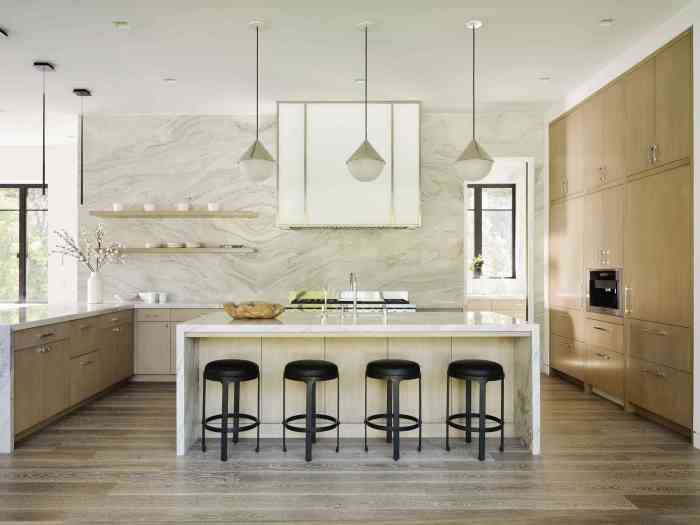
Proper lighting is crucial in kitchen interiors as it not only enhances the overall aesthetic appeal but also plays a functional role in creating a safe and efficient workspace. Different types of lighting, such as task lighting, ambient lighting, and accent lighting, each serve specific purposes in a kitchen setting.
Types of Lighting
- Task Lighting: Task lighting is essential for illuminating specific work areas in the kitchen, such as the countertops, stove, and sink. It helps in performing tasks with precision and reduces eye strain.
- Ambient Lighting: Ambient lighting provides overall illumination to the entire kitchen space. It sets the mood and ensures a well-lit environment for general activities in the kitchen.
- Accent Lighting: Accent lighting is used to highlight certain features or focal points in the kitchen, such as artwork, architectural details, or decorative elements. It adds depth and visual interest to the space.
Layering Lighting
Layering lighting is a design technique that involves combining different types of lighting to create a well-balanced and inviting atmosphere in the kitchen. By layering task, ambient, and accent lighting, you can achieve both functionality and aesthetics in your kitchen space.
Wrap-Up
In conclusion, kitchen interior design is a blend of creativity and functionality, where every element contributes to the overall aesthetic and usability of the space. By understanding the importance of layout, color schemes, materials, and lighting, you can transform your kitchen into a welcoming haven for culinary adventures and social gatherings.
Embrace the possibilities of kitchen interior design and let your creativity shine in every corner of this essential space.
Essential FAQs
What are some innovative ways to incorporate essential elements into a kitchen space?
Consider using multi-functional furniture, smart storage solutions, and creative lighting options to maximize both style and functionality in your kitchen.
How can I choose the right color scheme for my kitchen based on its size and natural light?
For smaller kitchens, opt for light and neutral colors to create a sense of space. In kitchens with ample natural light, you can experiment with bolder color palettes to add personality.
What are the different types of kitchen layouts and their benefits?
Common layouts include L-shaped, U-shaped, and galley kitchens. Each layout offers unique advantages in terms of workflow, storage, and overall efficiency.
How can I effectively mix and match different materials for a cohesive look in my kitchen?
Focus on creating a harmonious blend by selecting materials that complement each other in terms of color, texture, and style. Experiment with combinations to find the perfect balance for your kitchen design.
Why is proper lighting crucial in kitchen interiors?
Good lighting enhances visibility, mood, and functionality in the kitchen. By layering different types of lighting, you can create a well-lit and inviting space for cooking and socializing.